22nd Anniversary & Lunar New Year Special: $359.00聽鈥斅� Best Price Guarantee
鉁� 1. FREE Worldwide Express Shipping (1-5 days urgent; 1-17 days regular)
鉁� 2. FREE Premium Accessories
鉁� 3. 365-Day Full Refund Guarantee
More Exclusive Services Available: Free Custom-Made 鉁旓笍 Free Accelerated 鉁旓笍 Free Advanced Shipping 鉁旓笍 Need custom colors/sizes or a redesign? Note it in your order or email us.
馃弳Chosen by Harvard, Hollywood, American Museum of Natural History, Opera America
1. -Year Leader. #1 largest and best in traditional items. So most currencies supported
2.24/7 VIP Expert Support. Free consultation or any assistance you need
3. 100% Satisfaction Guarantee. You will it, or we will remake it for you.
Handicraft: Handmade by the best traditional tailors
Delivery: As the largest traditional costume shop, 1-17 days FREE worldwide shipping via UPS, DHL, SF or FedEx is offered
Size: You may select the stock standard size based on the size chart.
Color: you do not need to select the color section or simply select Same if you want it to be the Same as Picture.
If you wish to change the main color, please select it based on the color chart and let our top traditional designers design the rest for you. Or you may select "Free Customization" and leave us a message containing your detail color requests on the order form. This custom service has no extra cost!
Free Rush Service Available: Standard tailoring takes 1-2 weeks. If you need it by a specific date, please leave your required receipt date in the order notes. We will prioritize your order as a rush request to ensure timely delivery.
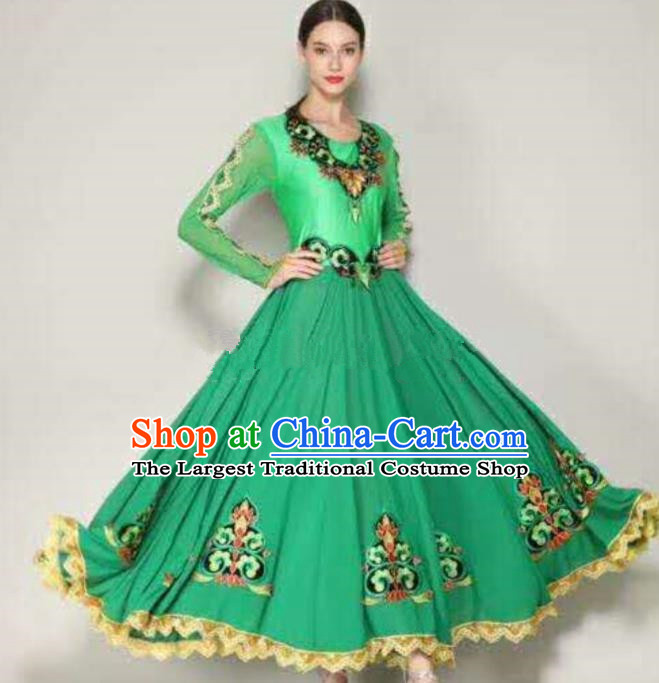
The traditional Chinese Xinjiang Uyghur Nationality Folk Dance Green Dress is a stunning piece of cultural attire that embodies the rich history and traditions of this ethnic group.
The dress is made from high-quality materials, such as silk and cotton, and features intricate embroidery and other decorative elements that showcase the skill and creativity of the artisans who crafted it.
The green color of the dress represents the natural beauty and vitality of the Xinjiang region, where the Uyghur people have lived for centuries.
It also symbolizes the importance of nature in their culture, which places great emphasis on harmony with the environment.
The dress is often worn during special occasions, such as weddings or festivals, and is a symbol of pride and identity for the Uyghur people.
It is also a popular souvenir for tourists who want to take a piece of their cultural heritage back home with them.
In addition to its aesthetic value, the green dress has historical significance as well.
It was first worn by Uyghur women during the Qing Dynasty (1644-1912) and has since become an iconic symbol of their culture and traditions.
Its popularity has only grown over time, making it a valuable piece of cultural heritage that continues to be cherished by generations of Uyghur people.
Please fill in the form below. For your convenience, our Customer Care Department opens 24 hours a day, 7 days a week. You will receive our reply within 1-24 hours.
Require customization based on a provided image? Let Us Assist You!
As 21-year leader in crafting and tailoring, trusted by many renowned clients worldwide, our expert team is well-known for superior quality and rapid delivery. Contact us at service@china-cart.com or fill out the form below to get a fast reply within 15 hours. We will bring your best vision to life within your budget and deadline!







 Listen in the gallery