Delivery: 1-17 days FREE worldwide shipping Handicraft: Well handmade by top traditional tailors using top quality fabrics Size: The listed sizes are in stock. If you prefer to customize it, please select "Free Customization" and leave us a note containing your size number or measurements of height, weight, bust, waist and hip on the order form. Color: If you like the original color most, you do not need to select it or simply select "Same as the picture". If you wish to change the primary color, you may select it based on the color chart. Or you may select "Free Customization" and leave us a note containing your detail color requests on the order form. Free Customization Available: If you prefer to let our top traditional tailors specially customize it for you, please select "Free Customization" in size or color, then provide your measurements (or usual size number) and/or color requests in the order form. This special tailoring service is free. Free Urgent Delivery Available: If needed, just leave your desired date in the order notes. We will try our best to help and handle the rest at no cost!
Rich Artistic Connotation & Historical Background:
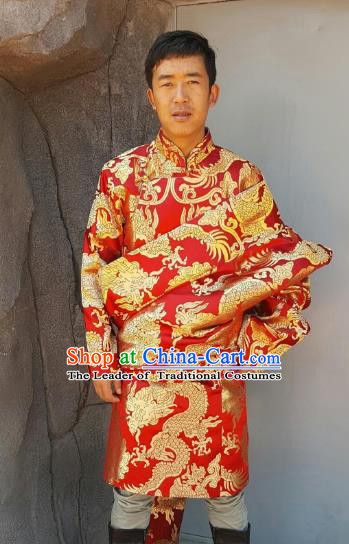
Chinese Traditional Zang Nationality Wedding Costume, also known as the Chinese Tibetan Ethnic Embroidered Dragon Red Tibetan Robe for Men, is a traditional attire worn during weddings in China's Tibet Autonomous Region.
This exquisite garment is a symbol of cultural heritage and represents the rich history and traditions of the region.
The intricate embroidery on the robe features a dragon, which is a revered animal in Chinese culture and symbolizes power, strength, and good fortune.
The red color of the robe is also significant, as it represents happiness and prosperity.
The wedding costume is typically made from high-quality materials such as silk and cotton, and is adorned with intricate patterns and designs that reflect the unique beauty of the region.
It is a beautiful and meaningful piece of clothing that serves as a reminder of the deep connection between the bride and groom and their cultural roots.
 Listen in the gallery Listen in the gallery
|




 -year leader,
 it. Or we remake it for FREE.