Delivery: 1-17 days FREE worldwide shipping Handicraft: Well handmade by top traditional tailors team Fabric: Various top traditional fabrics Size: You can pick a standard size we have in stock. If you want our top traditional tailors to custom-make it for you for free, just choose "Free Customization" and tell us your measurements or your usual size in the order note. Color: If you like the same color in stock most, you do not need to select the color section. If you wish to change it, you may select another main color on the color section. Or you may select "Free Customization" and leave us a note containing your detail color requirements on the order form.
Rich Artistic Connotation & Historical Background:
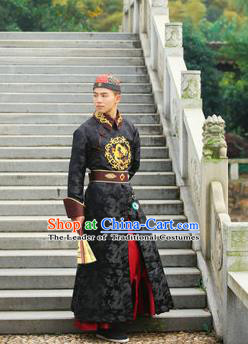
This artwork features the traditional robes of a royal prince and the male attire of a Manchurian emperor from the Qing Dynasty in ancient China.
They represent one of the most glorious periods in Chinese history, the Qing Dynasty.
The design and creation of these garments embody the essence and aesthetic values of ancient Chinese culture.
The robe is a symbolic attire for the aristocratic class in ancient China, usually made of silk with exquisite patterns and characters embroidered on it.
The design of this robe is meticulous, featuring intricate embroidery on the collar, cuffs, and hemline, showcasing the superb craftsmanship of ancient China.
Additionally, the color of the robe is also significant, usually red or yellow, symbolizing the royalty's nobility and authority.
The male attire is exclusively worn by the emperors of the Qing Dynasty, also made of silk with auspicious patterns such as dragons and phoenixes embroidered on it.
This male attire is extravagantly designed, featuring delicate embroidery on the collar, cuffs, and hemline, demonstrating the superb craftsmanship of ancient China.
Moreover, the color of the attire is also significant, usually yellow or red, symbolizing the emperor's nobility and authority.
These garments not only have high artistic value but also reflect the historical significance of ancient Chinese culture.
They represent the hierarchical system and etiquette norms of ancient Chinese society while displaying the aesthetic concepts and artistic styles of ancient Chinese culture.
By appreciating these garments, we can better understand the development process and spiritual connotations of ancient Chinese culture.
 Listen in the gallery Listen in the gallery
|




 -year leader,
 it. Or we remake it for FREE.