Delivery: 1-17 days FREE worldwide shipping Handicraft: Well handmade by top traditional tailors team Fabric: Various top traditional fabrics Size: You can pick a standard size we have in stock. If you want our top traditional tailors to custom-make it for you for free, just choose "Free Customization" and tell us your measurements or your usual size in the order note. Color: If you like the same color in stock most, you do not need to select the color section. If you wish to change it, you may select another main color on the color section. Or you may select "Free Customization" and leave us a note containing your detail color requirements on the order form.
Rich Artistic Connotation & Historical Background:
In ancient China, the emperor was the highest ruler and held the most powerful position.
Their clothing designs were intricate and reflected their status and power.
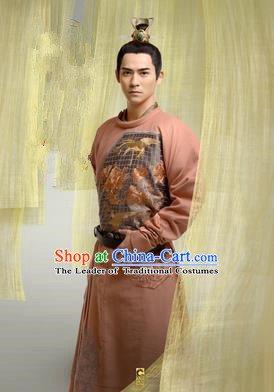
Traditional Chinese imperial attire included elements such as dragon robes, crowns, jade belts, and golden boots.
These garments were typically made of silk and featured bright colors and ornate patterns.
During the Tang Dynasty, the emperor's clothing became even more elaborate and complex.
Taizong Emperor of Tang, one of the most famous emperors in Chinese history, is known for having some of the most magnificent imperial attire in Chinese history.
Taizong's clothing consisted of a long robe, a belt, a pair of golden shoes, and a crown.
He also wore glasses, which was quite rare at that time.
Apart from the emperor's clothing, there were other types of ancient Chinese clothing, such as those worn by officials, soldiers, and civilians.
Officials' clothing was usually black or gray with gold decorations.
Soldiers' clothing was often blue or green with red accents.
Civilians' clothing was simpler, usually white or gray.
In conclusion, ancient Chinese clothing designs were exquisite and complex, reflecting the social hierarchy and cultural traditions of the time.
These garments not only had aesthetic value but also reflected historical and social contexts.
 Listen in the gallery Listen in the gallery
|




 -year leader,
 it. Or we remake it for FREE.