Delivery: 1-17 days FREE worldwide shipping Handicraft: Well handmade by top traditional tailors using top quality fabrics Size: The listed sizes are in stock. If you prefer to customize it, please select "Free Customization" and leave us a note containing your size number or measurements of height, weight, bust, waist and hip on the order form. Color: If you like the original color most, you do not need to select it or simply select "Same as the picture". If you wish to change the primary color, you may select it based on the color chart. Or you may select "Free Customization" and leave us a note containing your detail color requests on the order form. Free Customization Available: If you prefer to let our top traditional tailors specially customize it for you, please select "Free Customization" in size or color, then provide your measurements (or usual size number) and/or color requests in the order form. This special tailoring service is free. Free Urgent Delivery Available: If needed, just leave your desired date in the order notes. We will try our best to help and handle the rest at no cost!
Rich Artistic Connotation & Historical Background:
Chinese opera is an important component of Chinese culture, including Beijing Opera, Cantonese Opera, and Kunqu Opera.
These forms of opera have a long history and rich cultural heritage.
In these operas, costumes and headdresses are very important parts that not only have aesthetic value but also reflect the cultural characteristics of different regions and periods.
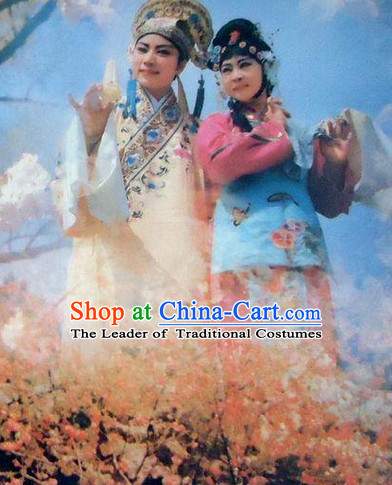
In Beijing Opera, actors usually wear gorgeous costumes, including robes, mandarin jackets, flower darning clothes, etc.
These costumes are usually made of silk and embroidered with exquisite patterns and decorations.
Headdresses are also an indispensable part of Beijing Opera, which can be hair buns, headscarves, helmets, etc.
These headdresses are usually matched with costumes to highlight the personality and role characteristics of the actor.
In Cantonese Opera, actors usually wear colorful costumes, including cheongsam, python robes, etc.
These costumes are usually made of silk and cotton fabrics and embroidered with various patterns and decorations.
Headdresses are also an important element in Cantonese Opera, which can be hair buns, headscarves, helmets, etc.
These headdresses are usually matched with costumes to highlight the personality and role characteristics of the actor.
In Kunqu Opera, actors usually wear gorgeous costumes, including robes, mandarin jackets, flower darning clothes, etc.
These costumes are usually made of silk and embroidered with exquisite patterns and decorations.
Headdresses are also an indispensable part of Kunqu Opera, which can be hair buns, headscarves, helmets, etc.
These headdresses are usually matched with costumes to highlight the personality and role characteristics of the actor.
In addition to costumes and headdresses, Chinese opera also includes various props and makeup techniques.
For example, in Beijing Opera, actors usually use wigs to increase the amount and length of their hair; in Cantonese Opera, actors usually use wigs to increase the color and luster of their hair; in Kunqu Opera, actors usually use wigs to increase the amount and length of their hair.
In addition, there are various makeup techniques such as facial makeup, eyebrows, eyeliner, etc.
In summary, costumes and headdresses in Chinese opera are important components of its unique charm.
They not only have aesthetic value but also reflect the cultural characteristics of different regions and periods.
By appreciating the design and production process of these costumes and headdresses, we can better understand the richness and diversity of traditional Chinese culture.
 Listen in the gallery Listen in the gallery
|



 -year leader,
 it. Or we remake it for FREE.