Delivery: 1-17 days FREE worldwide shipping Handicraft: Well handmade by top traditional tailors team Fabric: Various top traditional fabrics Size: Fit as expected. And you may choose it based on your usual size. Color: If you like the original design, please select "Same as the picture". If you wish to change the primary color, you may select another main color.
Free Customization Available: If needed, select this option and leave your measurements (or usual size number) and/or color requests in the order notes. Free Urgent Delivery Available: If needed, just leave your desired date in the order notes. We will try our best to help and handle the rest at no cost!
Rich Artistic Connotation & Historical Background:
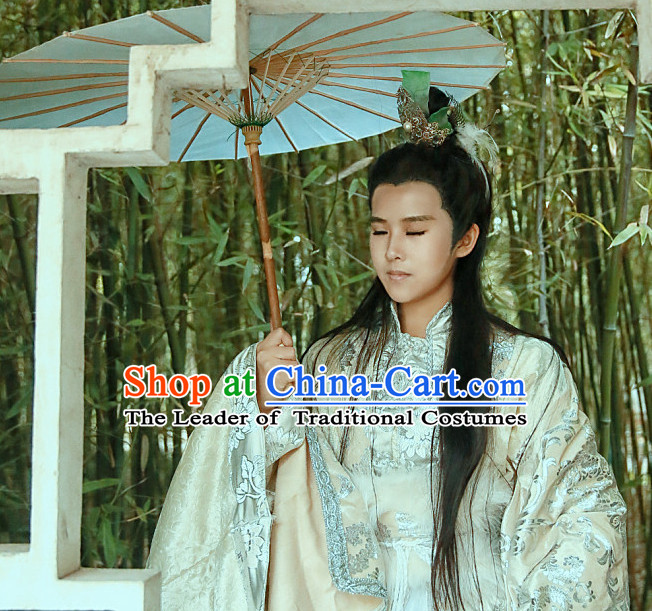
Gorgeous Chinese emperor and prince costumes are one of the representatives of ancient Chinese clothing, known for their exquisite design and unique style.
These costumes are usually made of silk, cotton cloth, and other high-quality materials to show the wealth and status of the wearer.
They are often decorated with details such as gold and silver threads, embroidery, and beads, making them visual works of art.
In ancient China, the emperor and prince were at the highest level of society, and their costumes reflected this.
The emperor's costume was usually gold or silver, adorned with various patterns and symbols such as dragons, phoenixes, and kylin, which represent auspiciousness.
These patterns often symbolize imperial power and authority.
In contrast, the prince's costume is relatively simple but still emphasizes detail and refinement.
In addition to the costumes of the emperor and prince, there are other types of ancient Chinese clothing, such as those worn by officials, soldiers, and civilians.
Each type of clothing has its unique characteristics and style, reflecting the identity and status of different social classes.
In conclusion, gorgeous Chinese emperor and prince costumes are an indispensable part of China's cultural heritage.
They not only represent the aesthetic concepts and technical level of ancient Chinese society but also reflect the political, economic, and cultural background of that time.
 Listen in the gallery Listen in the gallery
|



 it.
it. 
 years of leading craftsmanship