Delivery: 1-17 days FREE worldwide shipping Handicraft: Well handmade by top traditional tailors using top quality fabrics Size: The listed sizes are in stock. If you prefer to customize it, please select "Free Customization" and leave us a note containing your size number or measurements of height, weight, bust, waist and hip on the order form. Color: If you like the original color most, you do not need to select it or simply select "Same as the picture". If you wish to change the primary color, you may select it based on the color chart. Or you may select "Free Customization" and leave us a note containing your detail color requests on the order form. Free Customization Available: If you prefer to let our top traditional tailors specially customize it for you, please select "Free Customization" in size or color, then provide your measurements (or usual size number) and/or color requests in the order form. This special tailoring service is free. Free Urgent Delivery Available: If needed, just leave your desired date in the order notes. We will try our best to help and handle the rest at no cost!
Rich Artistic Connotation & Historical Background:
Chinese Beijing Opera, also known as Peking Opera, is a traditional Chinese art form that combines music, singing, dancing, and acrobatics.
It has a rich history dating back to the late 18th century and has been recognized as an intangible cultural heritage of China by UNESCO in 2010.
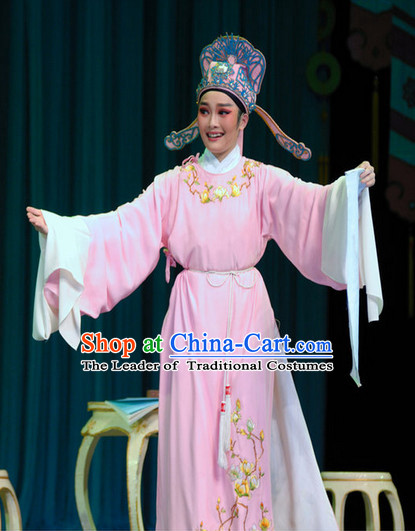
The costumes and headwear for men are an essential part of this art form, representing the different roles and personalities of the characters they portray.
The scholar costume is one of the most iconic pieces in Chinese opera, with its intricate embroidery, colorful patterns, and elegant design.
It is typically worn by male actors who play scholars or officials in historical plays.
The headwear, such as the changshan (a type of hat) and the qipao (a long-sleeved dress), also play an important role in enhancing the character's appearance and personality.
For example, the changshan is often worn by male characters who are brave and confident, while the qipao is more commonly seen on female characters who are gentle and graceful.
The combination of these elements creates a unique visual experience for audiences, allowing them to fully immerse themselves in the story and appreciate the beauty of Chinese opera.
 Listen in the gallery Listen in the gallery
|



 it.
it. 
 years of leading craftsmanship