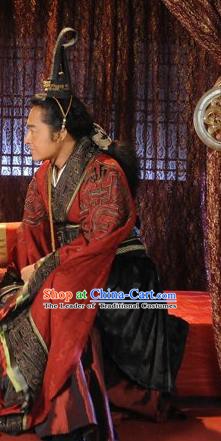
Delivery: As the traditional costume leader which has the largest stock, 1-17 days FREE worldwide shipping is offered.Handicraft: Well handmade by top traditional tailors team Fabric: Various top traditional fabrics Size: Fit as expected. And you may choose it based on your usual size. Color: If you like the original design, you may select Same as the picture. If you wish to change the primary color, you may select another main color. Free Custom-made Available: If needed, please select 鈥淔ree Customization鈥� and leave your measurements or color requirements in the order note.
Rich Artistic Connotation & Historical Background:
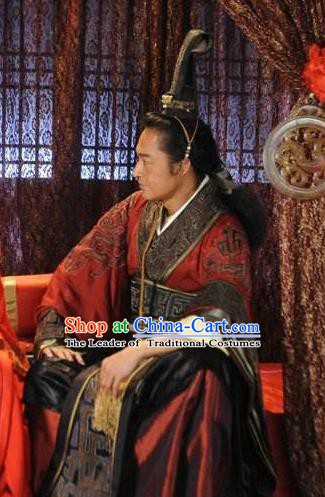
During the Spring and Autumn Period in ancient China, the clothing of King Fu Chai of the Wu Kingdom was the most eye-catching fashion of the time.
These garments were known for their ornate, intricate designs, showcasing the aesthetic values and cultural beliefs of the era.
Fuchai's clothing was typically made from silk, featuring bright colors and complex patterns.
Men wore long robes, pants, and shoes, topped with hats or headbands.
They also adorned themselves with jewelry such as necklaces, bracelets, and rings to display their wealth and status.
Additionally, they would wear belts to secure their clothing and provide extra comfort.
In addition to their attire, Fuchai paid attention to his hairstyle and makeup.
His hair was often styled into a "queue," a type of bun where the hair is tied into a circular or oval shape.
This hairstyle was not only beautiful but also convenient for daily activities.
He would also use various cosmetics to enhance his facial features, such as eyebrows, eyeliner, and lipstick.
Fuchai's clothing and makeup reflected the society's pursuit of beauty and emphasis on personal image during that time.
These details showcased the ruler's power and status, as well as their role in society.
By observing these garments and makeup styles, we can gain a better understanding of ancient Chinese cultural traditions and aesthetic values.
 Listen in the gallery Listen in the gallery
|



 it.
it. 
 years of leading craftsmanship